
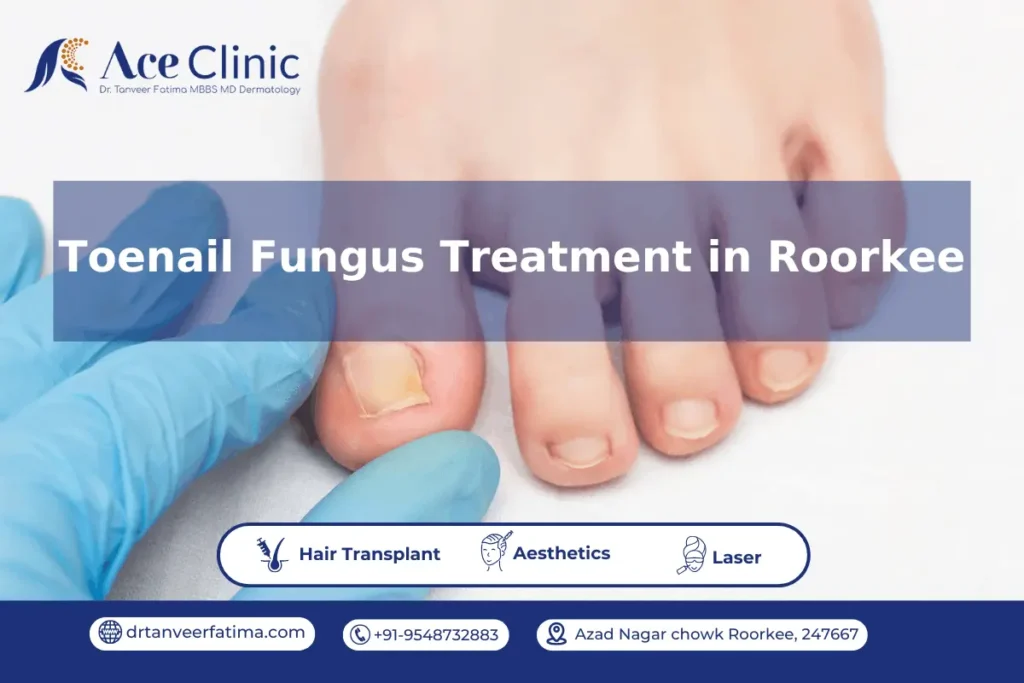
Toenail Fungus Treatment in Roorkee – Causes, Symptoms, Diagnosis & Best Treatment Options
Toenail fungus treatment in Roorkee is becoming increasingly important as more people experience nail discoloration, thickening, and brittle toenails caused by fungal infections.
Toenail fungus treatment in Roorkee helps individuals get relief from a stubborn condition that often worsens if ignored. With professional toenail fungus treatment in Roorkee, patients can restore healthy nails, prevent recurrence, and avoid long-term nail damage.
If you are noticing changes in your toenails, seeking timely toenail fungus treatment in Roorkee from a qualified dermatologist can make a significant difference.
Toenail fungus, medically known as onychomycosis, is a common infection that affects the nail plate, nail bed, and surrounding skin. It usually develops slowly but can become severe over time. Fortunately, advanced dermatology clinics now offer safe and effective solutions for toenail fungus treatment in Roorkee.
What Is Toenail Fungus (Onychomycosis)?
Toenail fungus is a fungal infection caused by dermatophytes, yeast, or molds that invade the nail. The fungus thrives in warm, dark, and moist environments, making toenails more prone than fingernails. Once the fungus enters through tiny cracks in the nail or surrounding skin, it begins to multiply and gradually damages the nail structure.
Without proper treatment, toenail fungus can spread to other nails and even to the skin of the feet.
Common Causes of Toenail Fungus
Several factors increase the risk of developing toenail fungus:
Wearing Tight or Non-Breathable Shoes
Tight shoes trap moisture and heat around the feet, creating an ideal environment for fungal growth. Shoes made from non-breathable materials prevent proper air circulation, increasing the risk of toenail fungus.
Excessive Sweating
Sweaty feet remain damp for long periods, which allows fungus to thrive. People who sweat heavily or wear closed shoes for long hours are more prone to fungal nail infections.
Poor Foot Hygiene
Not washing and drying feet properly can lead to the buildup of bacteria and fungi. Skipping regular nail trimming and foot care increases the chances of infection.
Walking Barefoot in Public Places
Public areas like swimming pools, gyms, and locker rooms often contain fungal spores. Walking barefoot in these places makes it easy for fungus to enter through tiny cracks in the skin or nails.
Sharing Nail Tools, Towels, or Footwear
Using contaminated nail clippers, shoes, or towels can transfer fungus from one person to another. Personal items should never be shared to prevent infection.
Nail Injuries or Trauma
Small cuts, cracks, or injuries in the nail create an entry point for fungi. Even minor trauma can increase the risk of developing toenail fungus.
Weak Immune System or Chronic Illnesses like Diabetes
A weakened immune system makes it harder for the body to fight infections. People with diabetes or other chronic conditions are more likely to develop severe and recurrent fungal infections.
Identifying and managing these risk factors is an important part of successful toenail fungus treatment in Roorkee.
Signs and Symptoms of Toenail Fungus
Common symptoms include:
Yellow, White, or Brown Discoloration of Nails
Fungal infection often changes the natural color of the nail, making it appear yellow, white, or brown. This discoloration usually starts at the tip or side of the nail and gradually spreads.
Thickened or Distorted Nails
Infected nails may become thick, uneven, or misshapen due to fungal buildup under the nail. Thickened nails are harder to trim and may feel uncomfortable inside shoes.
Brittle, Crumbly, or Rough Nail Texture
Toenails affected by fungus can lose their smooth surface and become dry, weak, and crumbly. The nail may break easily or develop a rough, uneven texture.
Foul Smell from Affected Nails
As fungus grows under the nail, it can produce an unpleasant odor. This smell is often a sign of advanced infection and poor nail health.
Pain or Discomfort While Walking (in Advanced Cases)
In severe cases, thick and damaged nails can press against footwear, causing pain. Walking or wearing tight shoes may become uncomfortable due to inflammation and pressure.
If you notice any of these signs, consulting a dermatologist for toenail fungus treatment in Roorkee is recommended.
Why You Should Not Ignore Toenail Fungus
Many people consider toenail fungus a cosmetic issue, but it is actually a medical condition that requires proper care. Ignoring the infection can lead to:
Permanent Nail Damage
If toenail fungus is left untreated, it can permanently change the shape, thickness, and color of the nail. In severe cases, the nail may become deformed or even separate from the nail bed.
Spread to Other Nails or Skin
Fungal infections can easily spread from one nail to another or to the surrounding skin. This can lead to additional problems such as athlete’s foot or widespread fungal infection.
Pain and Difficulty Walking
Thickened and damaged nails can press against shoes, causing discomfort or pain. Over time, this may make walking or wearing footwear difficult.
Increased Risk of Secondary Bacterial Infection
Cracks and breaks in infected nails allow bacteria to enter the skin. This can result in redness, swelling, pain, and more serious infections.
Early toenail fungus treatment in Roorkee improves success rates and shortens recovery time.
How Toenail Fungus Is Diagnosed
Visual Examination by a Dermatologist
The dermatologist will first look closely at your nails to check for signs of fungal infection, such as discoloration, thickening, or brittle texture.
This helps determine whether the problem is fungal or caused by something else like psoriasis or injury.
Medical History Assessment
The doctor may ask about your lifestyle, medical conditions (like diabetes), recent injuries, or family history of nail problems.
This information helps understand why the infection might have occurred and how severe it is.
Nail Sample Collection (Laboratory Test)
In some cases, the dermatologist will take a small piece of the affected nail or scraping from under the nail.
This sample is sent to a lab to confirm the presence of fungus and identify the exact type.
Accurate Diagnosis Ensures Proper Treatment
Lab confirmation ensures that the treatment chosen (topical, oral, or laser) targets the right fungus.
This avoids unnecessary medications, reduces side effects, and increases the chances of complete recovery.
Best Toenail Fungus Treatment in Roorkee
Treatment depends on the severity of infection and patient health. Common options include:
Topical Antifungal Medications
Medicated nail lacquers, creams, and solutions are applied directly to the affected nail. These are effective in mild to moderate cases.
Oral Antifungal Medicines
Tablets may be prescribed for deeper or severe infections. They work from inside the body to eliminate fungus.
Nail Debridement
Thick and damaged nails are trimmed and thinned by a dermatologist to improve medicine penetration.
Laser Treatment for Nail Fungus
Laser therapy targets fungal cells without damaging surrounding tissue. It is a modern and effective option offered by many dermatology clinics.
A dermatologist in Roorkee will design a personalized treatment plan for best results.
How Long Does Toenail Fungus Treatment Take?
Slow Nail Growth
Toenails naturally grow slowly, at an average rate of about 1–2 mm per month.
Because of this, even after starting treatment, it can take time for the damaged nail to be fully replaced by healthy nail.
Typical Treatment Duration
Mild to moderate fungal infections may improve within 3–6 months with proper treatment.
Severe infections, or those affecting multiple nails, may require longer treatment—sometimes up to 9–12 months—to completely clear the fungus.
Importance of Consistency
Applying medications regularly, following your dermatologist’s advice, and keeping nails clean and dry are crucial.
Stopping treatment too early can allow the fungus to survive, making the infection return or prolonging recovery.
Monitoring Progress
Regular check-ups with a dermatologist help track improvement.
Visible results usually appear gradually, and patience is important to achieve healthy, clear nails.
Home Care Tips to Support Treatment
Keep feet clean and dry
Change socks daily
Wear breathable footwear
Use antifungal powder if advised
Avoid sharing nail tools
Trim nails straight and keep them short
These habits improve the effectiveness of toenail fungus treatment in Roorkee and reduce recurrence.
Prevention of Toenail Fungus
Maintain good foot hygiene
Avoid walking barefoot in public areas
Disinfect nail tools regularly
Choose moisture-wicking socks
Treat athlete’s foot promptly
Prevention plays a major role in long-term nail health.
When to Visit a Dermatologist
Infection Persists for More Than 2 Weeks
If your nail discoloration, thickening, or discomfort does not improve within two weeks, it may indicate an active fungal infection. Persistent symptoms mean you need professional evaluation and proper medical treatment.
Nails Become Painful or Swollen
Pain, redness, or swelling around the nail can be a sign that the infection has become severe or complicated. A dermatologist can prevent further damage and relieve discomfort with the right treatment.
You Have Diabetes or Poor Circulation
People with diabetes or circulation problems are more prone to serious nail infections. Early medical care helps avoid complications and supports safe healing.
Home Remedies Are Not Working
If natural or over-the-counter remedies do not show improvement, stronger medical treatment may be required. A dermatologist can prescribe effective options based on your condition.
Why Choose ACE Clinic for Toenail Fungus Treatment in Roorkee?
Choosing the right clinic plays an important role in successful treatment. At ACE Clinic, Roorkee, patients receive expert care for fungal nail infections using advanced and proven methods.
Experienced Dermatologist – ACE Clinic has qualified dermatologists who accurately diagnose toenail fungus and create personalized treatment plans for each patient.
Advanced Treatment Options – The clinic offers topical medications, oral antifungals, nail debridement, and modern laser treatment for nail fungus.
Accurate Diagnosis – Proper evaluation and lab testing ensure the infection is correctly identified before starting treatment.
Customized Care – Treatment is selected based on severity, nail condition, and patient health, ensuring better and faster results.
Hygienic & Safe Environment – ACE Clinic follows strict hygiene standards to prevent reinfection and ensure patient safety.
Long-Term Results – Focus on complete clearance of infection and prevention of recurrence.
With expert dermatologists, modern technology, and patient-centered care, ACE Clinic is one of the best choices for toenail fungus treatment in Roorkee.
Frequently Asked Questions (FAQs)
1. What is the most effective toenail fungus treatment in Roorkee?
The most effective treatment depends on the severity of the infection. A dermatologist may recommend topical antifungal medicines, oral tablets, nail debridement, or laser treatment. Consulting a specialist ensures the right treatment plan.
2. How long does toenail fungus treatment take to show results?
Visible improvement usually starts within a few weeks, but complete healing may take several months. Toenails grow slowly, so full clearance can take 3 to 6 months or longer in severe cases.
3. Can toenail fungus go away on its own?
No, toenail fungus usually does not heal without treatment. It often worsens over time and may spread to other nails or skin if left untreated.
4. Is laser treatment safe for toenail fungus?
Yes, laser treatment is a safe and non-invasive option. It targets fungal cells without damaging surrounding tissue and is commonly used in dermatology clinics.
5. Are home remedies effective for toenail fungus?
Home remedies may provide temporary relief but rarely cure the infection completely. Medical treatment from a dermatologist offers better and long-lasting results.
Conclusion
Toenail fungus is a common but completely treatable condition. With timely and proper toenail fungus treatment in Roorkee, you can restore healthy, clear nails and prevent the infection from coming back. If you notice any signs of fungal infection, consult Dr. Tanveer Fatima at ACE Clinic, Roorkee for expert diagnosis, personalized care, and effective treatment solutions designed for long-lasting results.
ACE Clinic
Timings: 10:00 AM TO 09:00 PM
Google Map Location Listing- https://maps.app.goo.gl/xC7d3epyAZRNRtRw5